
Contents
Moving an excavator, a generator or a production line is not ordinary freight. The load decides the trailer, the trailer decides the route, and the route decides which permits you need before anything leaves the yard. This guide covers how heavy equipment moves across the UAE and into the GCC, what slows it down, and what to prepare before booking.
Why Heavy Haul Is Not Ordinary Freight
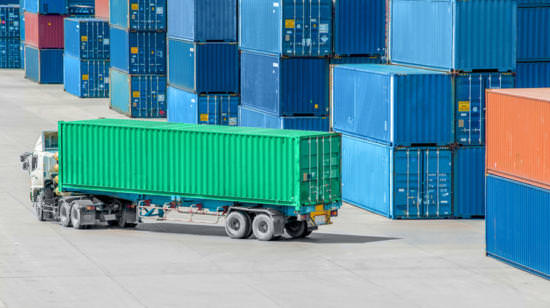
General cargo is planned around volume. Heavy equipment is planned around weight, height and axle loading, because those decide whether a bridge, a roundabout or an underpass is usable at all. A machine that fits a flatbed on paper may still be too tall once it is loaded. That is why the survey comes before the quote, not after it.
Choosing the Right Trailer
The trailer is chosen from the machine, not from whatever happens to be free that week. A tracked excavator, a transformer and a packaged production line each load differently, sit differently on the deck, and need different securing.
Low-bed trailers keep tall equipment under height limits. Flatbeds suit compact, self-supporting loads. Extendable trailers carry long items that would otherwise overhang unsafely. Getting this wrong costs twice: once when the load is refused at the gate, and again when a replacement trailer has to be mobilised and the crane booking is lost.

What Actually Delays a Heavy Move
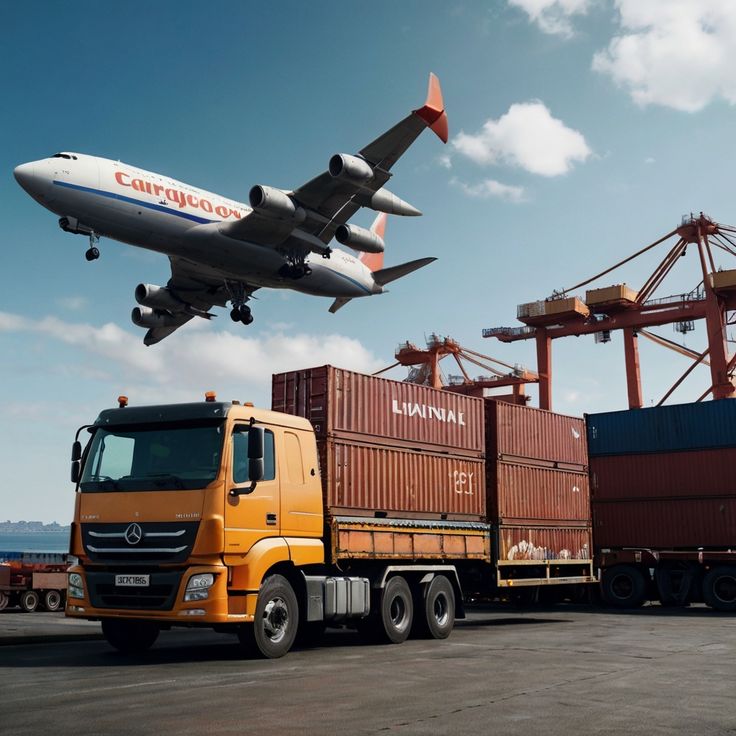
Delays are rarely caused by the driving. They come from the paperwork and the timing around it.
- Permits for oversized or overweight loads, which take time to issue
- Night-movement windows, when daytime running is not allowed
- Escort vehicles, which have to be booked alongside the truck
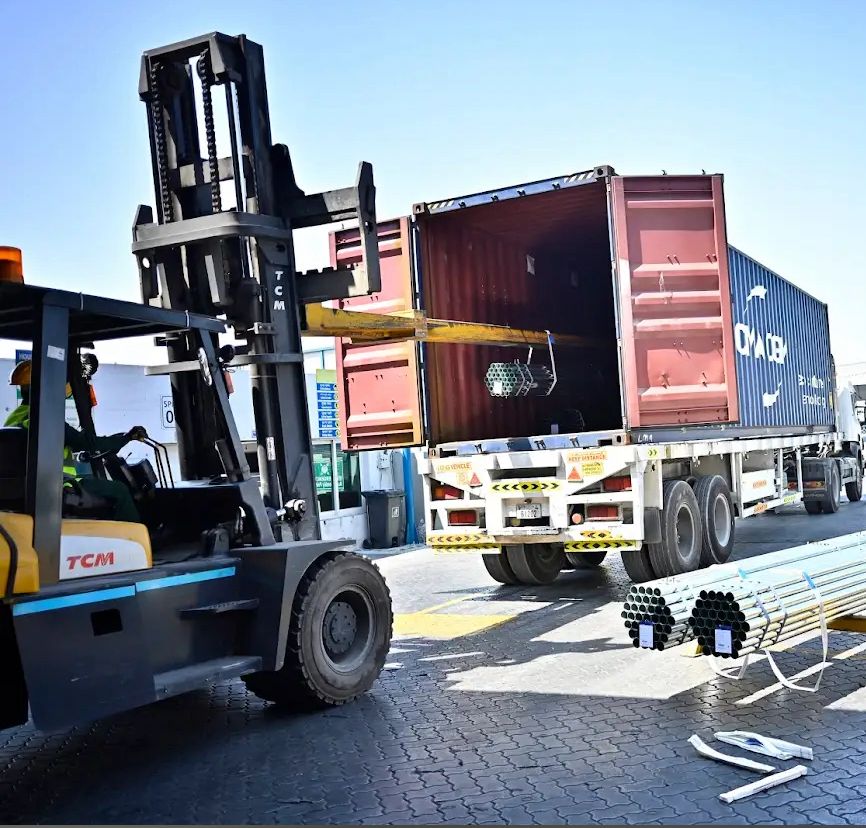
- Crane or forklift availability at both ends of the journey
- Dimensions that changed after the equipment was crated
Every one of these is predictable. None of them is quick to fix once the truck is already waiting.
Low-Bed in Transit

Almost every heavy haul problem we get called about started as a measurement nobody re-checked after the machine was crated. The truck is rarely the thing that went wrong.
Moving Equipment Across the GCC
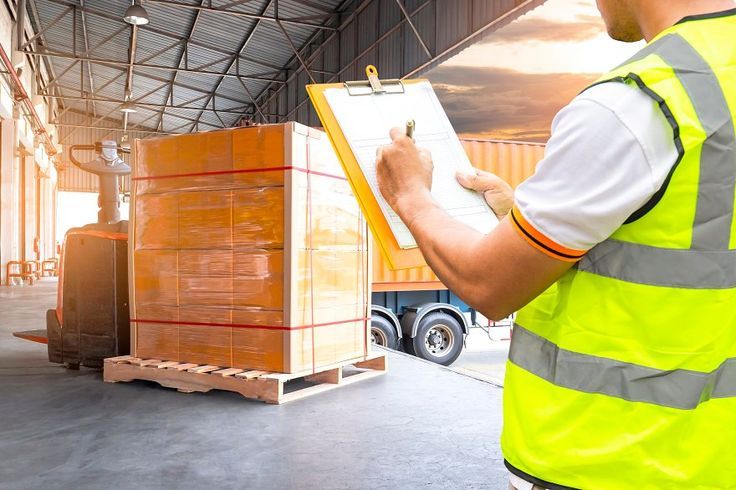
A cross-border move adds customs to the engineering. The equipment has to be described consistently on every document, and the serial numbers stamped on the machine have to match what was declared, because that is what gets physically checked at the border. Where the cargo arrived by sea, clearing at Jebel Ali or Khor Fakkan and trucking onward keeps the whole chain with one operator instead of three.

Loading, Securing and the Site Itself
Half of a heavy haul job happens before the truck moves. The collection point has to take a low-bed trailer, which means a turning circle, a firm surface and somewhere for the crane to stand. Sites that were fine for a van are often impossible for a forty-tonne combination.
Securing is the other half. Chains, chocks and lashings are chosen for the machine, and tracked equipment needs its own treatment because it can move on the deck under braking. We photograph the load once it is secured, which settles most questions later about how the equipment travelled.
Before and After Securing

A route that works on a map can still fail at one roundabout. We drive it before we quote it, because the only measurement that matters is the one taken on the road.
Equipment We Move


The short version
Measure the machine as it will travel, not as it left the factory. Everything else follows from that number.
 Customers ask how fast we can load. The better question is how well, because a machine that shifts in transit costs far more than the hour we saved.