
A Box the Right Size
Wooden Crating and Palletising in Dubai
A crate that is too big wastes freight you pay for by volume; one that is too weak fails at the first forklift. Cases here are built around the item rather than pulled off a shelf - measured, braced where the weight needs it, and closed so the cargo cannot move inside. Work is done in our own warehouses, usually on goods already in storage.
What We Build
Timber Packing to Suit the Load
The construction follows the weight, the shape and the journey rather than a standard size.
- Closed crates for full protection
- Open and slatted crates for bulky items
- Heavy-duty cases for machinery
- Custom pallets and skids
- Internal bracing and blocking
- Moisture barriers and lining where needed
Need a Crate Built?
Send the dimensions, the weight and the destination
Get a Crating Quote Call +971 4 239 7107ISPM-15 in Plain Terms
This is the requirement that catches exporters out, and it applies to the packing rather than to the goods inside it.
What it covers
Solid wood packaging - crates, cases, pallets, dunnage and bracing. Processed board such as plywood and OSB is outside the standard because manufacturing already treats it.
What compliance means
The timber is heat treated and the packing carries the stamp showing it. Customs at the far end checks the mark, not the contents.
What happens without it
Consignments can be refused, fumigated or destroyed at the destination, at the shipper's cost. It is one of the more expensive avoidable errors in exporting.
When you need it
Where the destination country enforces the standard and your packing contains solid wood. Tell us the destination and we will build to the right specification.
Crate, or pallet and wrap?
Not everything needs a closed case. A braced pallet with edge protection is often enough for robust goods, and it costs less to build and less to ship - see general cargo packing.
Built to Travel
What the Case Has to Survive
The design question is not what the item weighs but what will happen to it in transit.
-
Handling and stacking
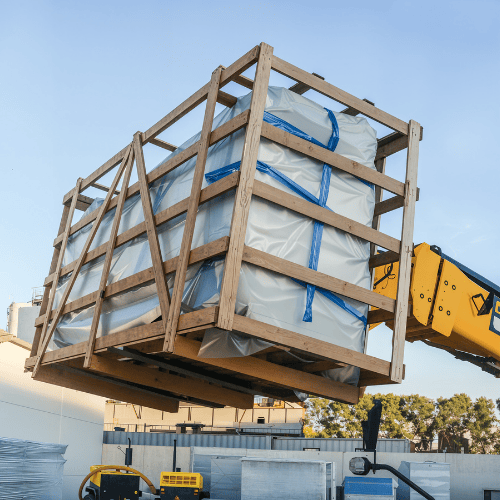
Cases are built to be lifted by forklift and to take the weight of whatever is stacked on them in a container.
-
Sea transit
Long voyages mean movement and moisture, so sea-bound cases are braced and lined differently from a road crate.
-
Heavy and awkward items
Machinery is blocked and bolted so it cannot shift - see machinery packing.
Why Cannata
Crating Where the Cargo Sits
Sending goods to a crating workshop and back adds two movements to a job whose entire purpose is preventing damage in transit.
Built on site
Crating is done in our own warehouses, on goods already stored there, rather than at a third-party workshop.
Sized for the container
Cases are built with the container or trailer in mind, so you are not paying freight on wasted space.
Shipped by us
Crated cargo goes straight onto our own transport and through our own customs clearance.
Rate Request
Get a price for this shipment
Give us the route and the cargo and we will come back with a rate, usually within one working day.
Our FAQs
Frequently Asked Questions
What exporters ask about crating and ISPM-15.